How to Care for Your Handcrafted Stone Products: The Complete Guide
Everything you need to know about cleaning, maintaining, and protecting your handcrafted stone sculptures, urlis, vases, and home decor. Tips for both indoor and outdoor stone pieces.
How to Care for Your Handcrafted Stone Products: The Complete Guide
You've brought home a beautiful handcrafted stone piece — a marble Ganesha for your prayer room, a sandstone Buddha for the garden, or a stone urli for your dining table. Now what?
The good news: natural stone is one of the most durable materials on earth. With just a little care, your handcrafted piece will look stunning for decades — even centuries. The pyramids are still standing, after all.
Here's our complete guide to keeping your stone handicrafts looking their absolute best.
The Golden Rules (For Every Stone Type)
Before we get into specifics, here are five universal rules that apply to every handcrafted stone piece:
- Dust regularly — It's the single most important thing you can do
- Use gentle cleaning — Warm water and mild soap is almost always enough
- Avoid harsh chemicals — No bleach, no acid-based cleaners, no abrasive powders
- Wipe spills promptly — Especially on polished marble surfaces
- Handle with care — Stone is strong but can chip if dropped on hard surfaces
Follow these five rules, and your stone piece will outlive you.
Care by Stone Type
Different stones have different needs. Here's what works best for each:
White Marble Care
White marble is the most popular stone for indoor handicrafts — sculptures, urlis, candle stands, and vases. It's stunning, but it does require a bit of attention.
Daily care:
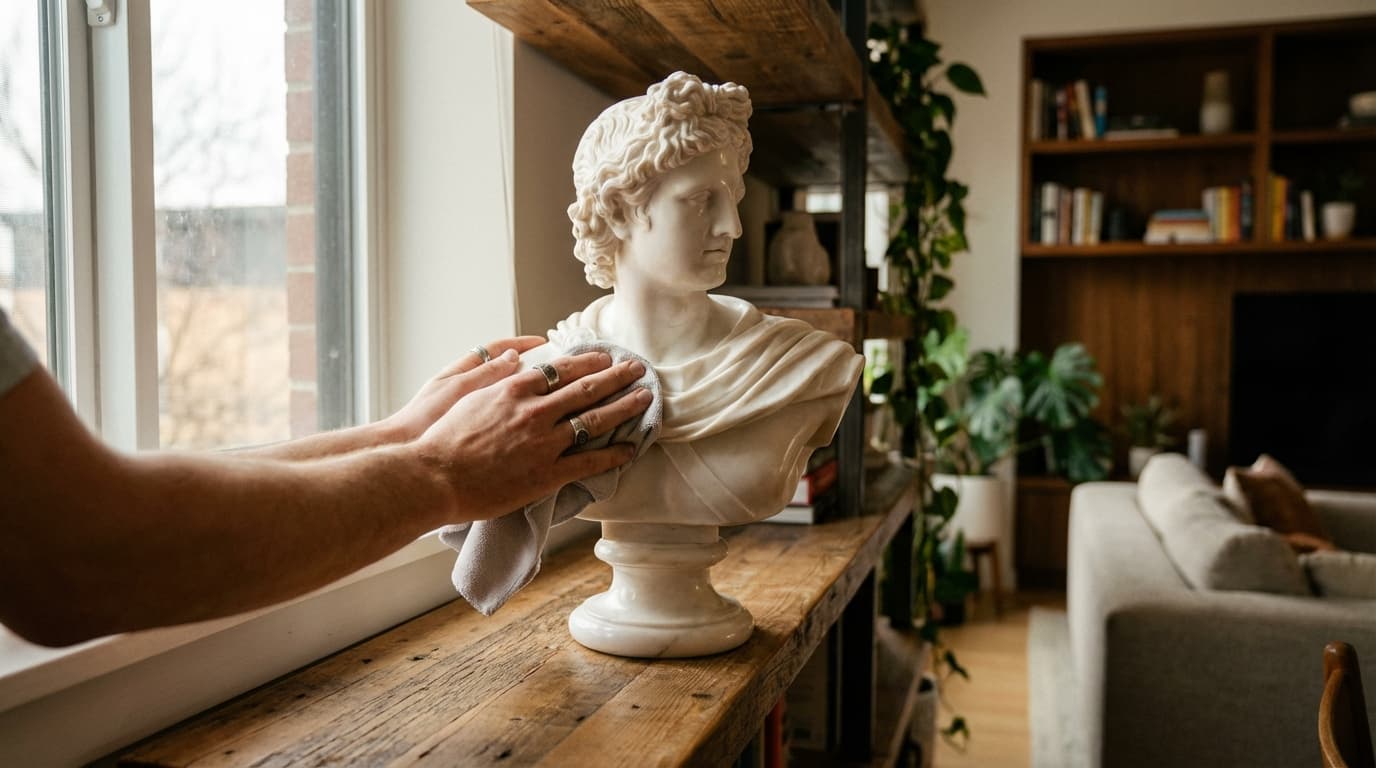
- Dust with a soft, dry microfiber cloth
- That's it. Seriously.
Weekly care:
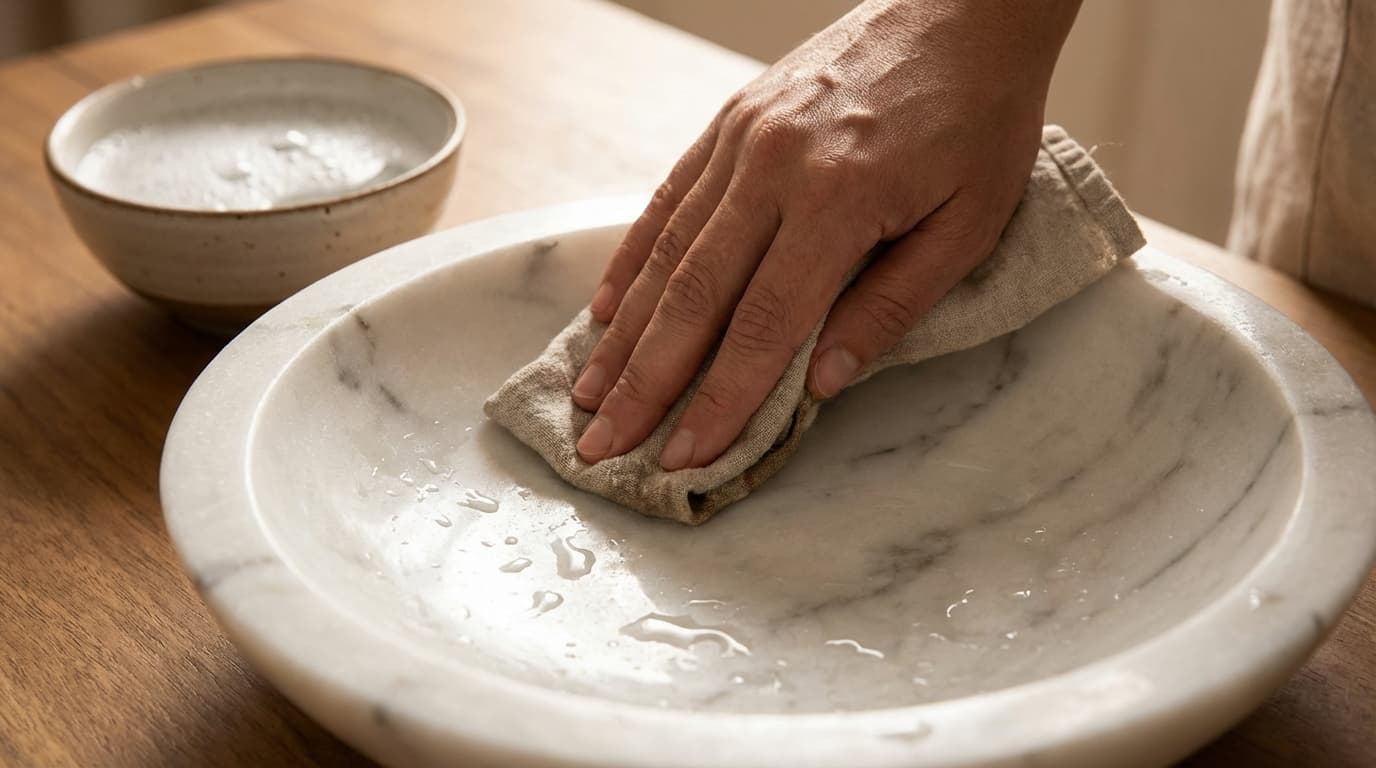
- Wipe with a slightly damp cloth (water only)
- For deeper cleaning, use warm water with a few drops of pH-neutral dish soap
- Dry immediately with a clean cloth to prevent water spots
What to avoid:
- ❌ Vinegar, lemon juice, or any acidic cleaner (causes etching — dull spots on the surface)
- ❌ Abrasive scrubbing pads (scratches the polish)
- ❌ Bleach or harsh chemical cleaners
- ❌ Placing directly on surfaces that might stain (newspaper ink, for example)
Common marble concerns:
Q: My marble has a dull spot. What happened? That's likely etching from contact with something acidic (citrus juice, wine, vinegar). For minor etching on polished marble, you can use a marble polishing powder — apply a small amount with water and buff gently with a soft cloth. For severe etching, consult a stone restoration professional.
Q: Can I use my marble urli for water and flowers? Absolutely! That's what it's designed for. Just empty and dry it between uses to prevent mineral deposits. Use clean water and change it every 2–3 days.
Q: Will my white marble turn yellow over time? Quality white marble should not yellow. If you notice discoloration, it's likely from prolonged contact with colored substances or iron-rich water. Regular cleaning prevents this.
Sandstone Care
Sandstone is the easiest stone to maintain. It's naturally tough and forgiving.
Daily/weekly care:
- Dust with a dry cloth or soft brush
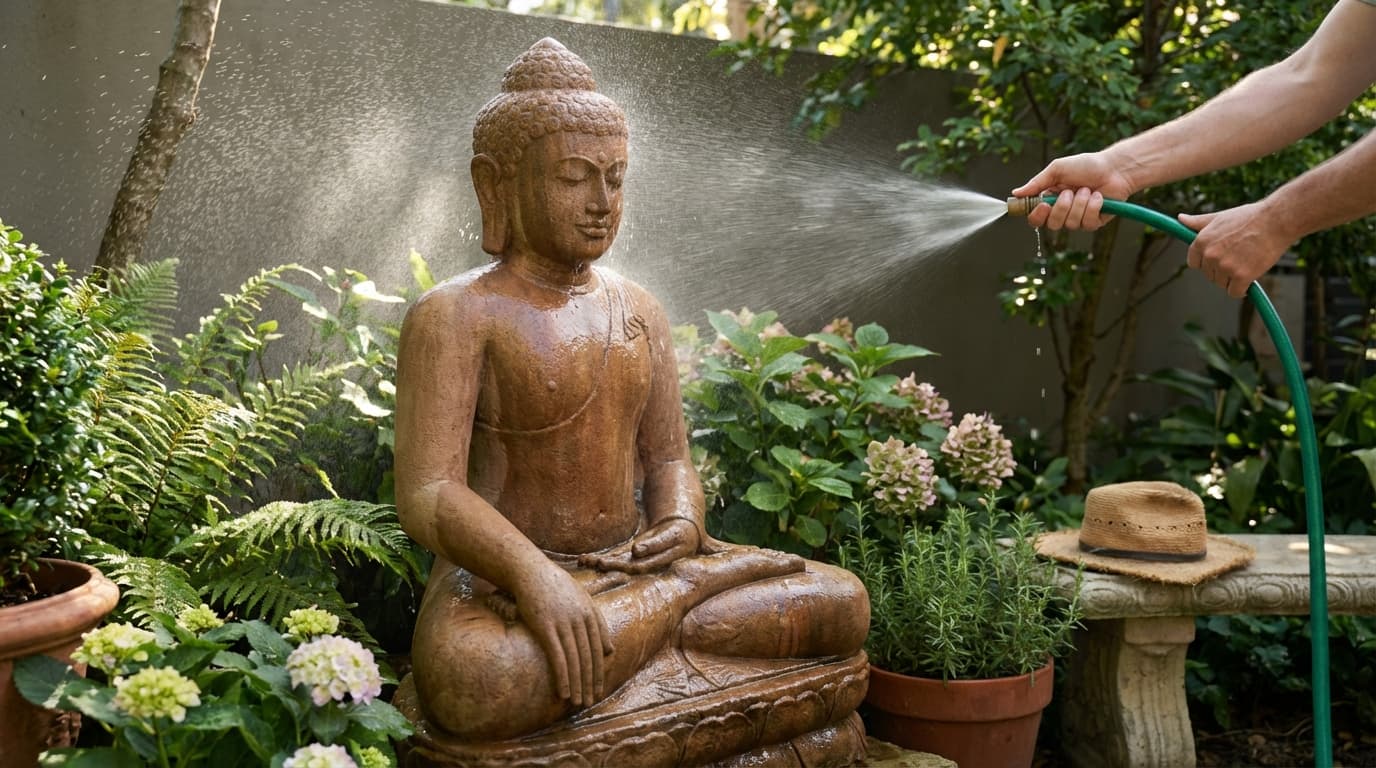
- For outdoor pieces, a quick rinse with a garden hose is perfect
Monthly care (outdoor pieces):
- Rinse with clean water
- If algae or moss appears, scrub gently with a soft brush and water
- Let it air dry — sandstone dries quickly
What to avoid:
- ❌ Pressure washers (can erode the surface texture over time)
- ❌ Wire brushes or metal scrapers (scratches the stone)
- ❌ Sealing (usually unnecessary for decorative sandstone pieces)
The beauty of patina: Outdoor sandstone develops a natural patina over time — a gentle aging that gives the stone character. This is considered a feature, not a flaw. Many of the most beautiful stone pieces in Rajasthan's forts and gardens are centuries old and look more magnificent because of their natural aging.
If you prefer a fresh look, regular rinsing keeps sandstone looking newer.
Black Stone Care
Black stone pieces are dramatic and contemporary. They're also relatively easy to maintain.
Regular care:
- Dust with a dry microfiber cloth (dust shows more on dark surfaces, so dust frequently)
- Wipe with a damp cloth for fingerprints
- Dry immediately — water spots show more on dark polished stone
What to avoid:
- ❌ Oily or waxy polishes (create a hazy residue on dark stone)
- ❌ Paper towels (can leave lint visible on dark surfaces; use microfiber instead)
Painted / Colored Stone Care
Many traditional Indian stone handicrafts feature hand-painted details — colors, gold leaf, or meenakari work.
Regular care:
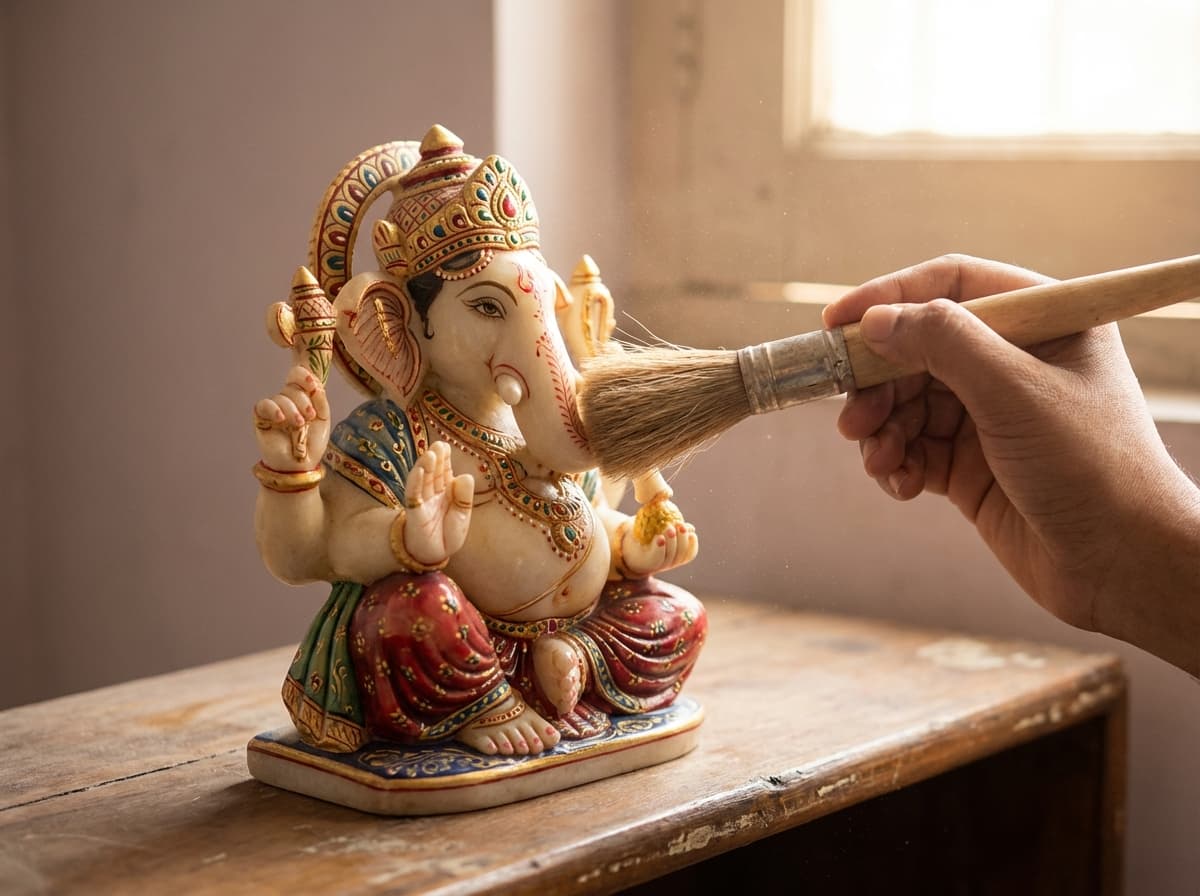
- Dust very gently with a soft, dry cloth
- Avoid rubbing painted areas aggressively
What to avoid:
- ❌ Soaking in water (prolonged water contact can loosen paint over time)
- ❌ Direct sunlight for extended periods (can fade colors over years)
- ❌ Abrasive cleaning of any kind
Indoor vs Outdoor: Different Environments, Different Care
Indoor Stone Pieces
Indoor pieces have it easy — protected from weather, they mainly just need regular dusting.
Key tips:
- Placement: Avoid direct sunlight on painted pieces. Natural light is fine for unpainted stone.
- Surface protection: Place a felt pad under your stone piece to protect both the stone and the furniture beneath it.
- Climate: Stone is not affected by air conditioning or heating. No special climate control needed.
- Humidity: Not a concern for most stone types. Even in humid coastal cities, stone handles moisture well.
Outdoor Stone Pieces
Outdoor pieces need a bit more attention, but stone is naturally built for the outdoors.
Seasonal care calendar:
| Season | Care Task |
|---|---|
| Spring | Rinse off winter dust, check for any moss/algae growth, gentle scrub if needed |
| Summer | Monthly rinse, ensure piece is stable (check for ground settling) |
| Monsoon | Rain cleans naturally! Check drainage — stone shouldn't sit in standing water |
| Winter | Clear fallen leaves and debris that may stain over time |
Placement tips for outdoor pieces:
- Place on a stable, level surface (paving stone, concrete pad, or compacted gravel)
- Avoid placing directly on soil — moisture from below can cause staining over time
- Ensure good drainage — stone shouldn't sit in puddles
- Under a tree? Beautiful look, but falling leaves and bird droppings will need occasional cleaning
Dealing with Common Issues
Stains
Water marks/mineral deposits (white spots, especially on dark stone):
- Wipe with a damp cloth and dry immediately
- For stubborn marks, use a stone-specific cleaner
Colored stains (from flowers, leaves, food):
- Create a paste of baking soda and water
- Apply to the stain, cover with plastic wrap
- Let sit for 24 hours, then rinse
- Repeat if needed
Oil/grease spots:
- Sprinkle cornstarch or baking soda on the spot
- Let it absorb for several hours
- Brush off gently and wipe clean
Chips and Minor Damage
Stone is durable, but chips can happen if a piece is dropped or knocked against a hard surface.
For small chips:
- A stone-colored epoxy or marble filler can make minor chips nearly invisible
- Match the color carefully — most hardware stores carry stone repair kits
- For valuable or sentimental pieces, consult a professional
For cracks:
- Small hairline cracks are often natural and don't affect structural integrity
- If a crack seems to be growing, stop using the piece and consult us
Prevention:
- Always lift stone pieces — never drag them across surfaces
- Use both hands for medium pieces, get help for heavy ones
- When moving, wrap in a soft blanket or towel
Algae and Moss (Outdoor Pieces)
Green growth on outdoor stone is natural and some people actually prefer the aged, mossy look. But if you want to remove it:
- Scrub with a soft brush and clean water
- For stubborn growth, mix a small amount of mild dish soap with water
- Rinse thoroughly
- Repeat monthly during monsoon season if moss returns quickly
What NOT to Do: Common Mistakes
Here are the most common stone care mistakes we see:
❌ Using vinegar as a "natural cleaner" — Vinegar is acidic and will etch marble surfaces, creating permanent dull spots
❌ Over-cleaning — Stone doesn't need daily scrubbing. Over-cleaning with soap can leave residue. Simple dusting is enough most days.
❌ Using bathroom/tile cleaners — These are formulated for ceramic, not natural stone. They're often too harsh.
❌ Pressure washing stone handicrafts — Too aggressive. It can erode carved details and damage the surface texture.
❌ Leaving water sitting in stone vessels for weeks — Change water in urlis every few days to prevent stagnation, mineral deposits, and mosquito breeding.
❌ Applying furniture polish or wax — Stone doesn't need polish. Wax builds up and creates a hazy, uneven surface.
Quick Reference: Care Cheat Sheet
| Stone Type | Dusting | Cleaning | Sealing | Outdoor OK? |
|---|---|---|---|---|
| White Marble | Daily (dry cloth) | Weekly (damp cloth + mild soap) | Optional (annual) | Yes, with more care |
| Black Stone | Daily (microfiber) | Weekly (damp cloth) | Not needed | Best indoors |
| Sandstone | Weekly (brush/cloth) | Monthly (water rinse) | Not needed | Perfect outdoors |
| Painted Stone | Weekly (soft brush) | Gentle dry dusting only | Not needed | Indoor only |
| Green Marble | Daily (dry cloth) | Weekly (damp cloth) | Optional (annual) | Best indoors |
Your Stone Care Toolkit
Everything you need to care for your stone collection:
Must-haves:
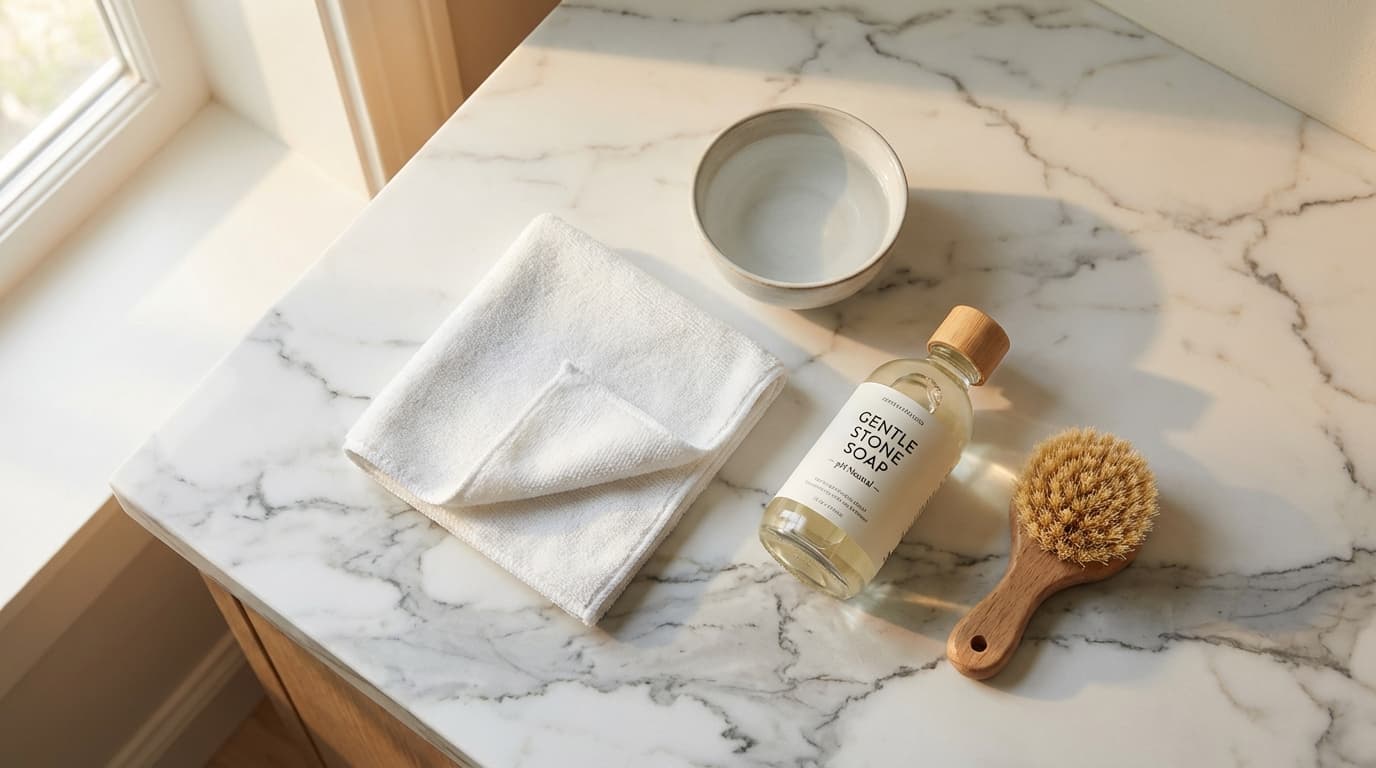
- 2–3 soft microfiber cloths (one for dusting, one for damp cleaning, one for drying)
- Mild pH-neutral dish soap
- Clean water
Nice-to-haves:
- Soft-bristled brush (for textured surfaces and outdoor pieces)
- Marble polishing powder (for occasional polish restoration on marble)
- Felt pads (to place under stone pieces on furniture)
Total cost: Under ₹500 for everything. Stone care doesn't need to be expensive.
When to Seek Professional Help
Most stone care is simple DIY. But some situations warrant a professional:
- Deep etching or scratches on polished marble
- Large cracks or structural damage
- Restoration of antique or heirloom pieces
- Paint touch-ups on traditional painted sculptures
- Stubborn stains that don't respond to home remedies
The Bottom Line
Caring for handcrafted stone is simpler than most people think. Here's the entire routine for most people:
Daily: Quick dust with a soft cloth (30 seconds) Weekly: Wipe with a damp cloth if needed (2 minutes) Monthly: Rinse outdoor pieces with water (5 minutes) Yearly: Assess if marble pieces need sealing
That's it. Your handcrafted stone piece was built to last. With minimal care, it will be just as beautiful in 50 years as it is today.
Have Questions About Your Piece?
Every stone is unique, and sometimes you need personalized guidance. Our team at Mour Handicrafts has been caring for natural stone for generations.
Mour Handicrafts — Every piece we create is meant to be treasured for generations. That means building them to last, and helping you keep them beautiful.

Mour Handicrafts Team
Generational artisan craftsmanship from Rajasthan. We share insights to help you find and care for handcrafted stone pieces.